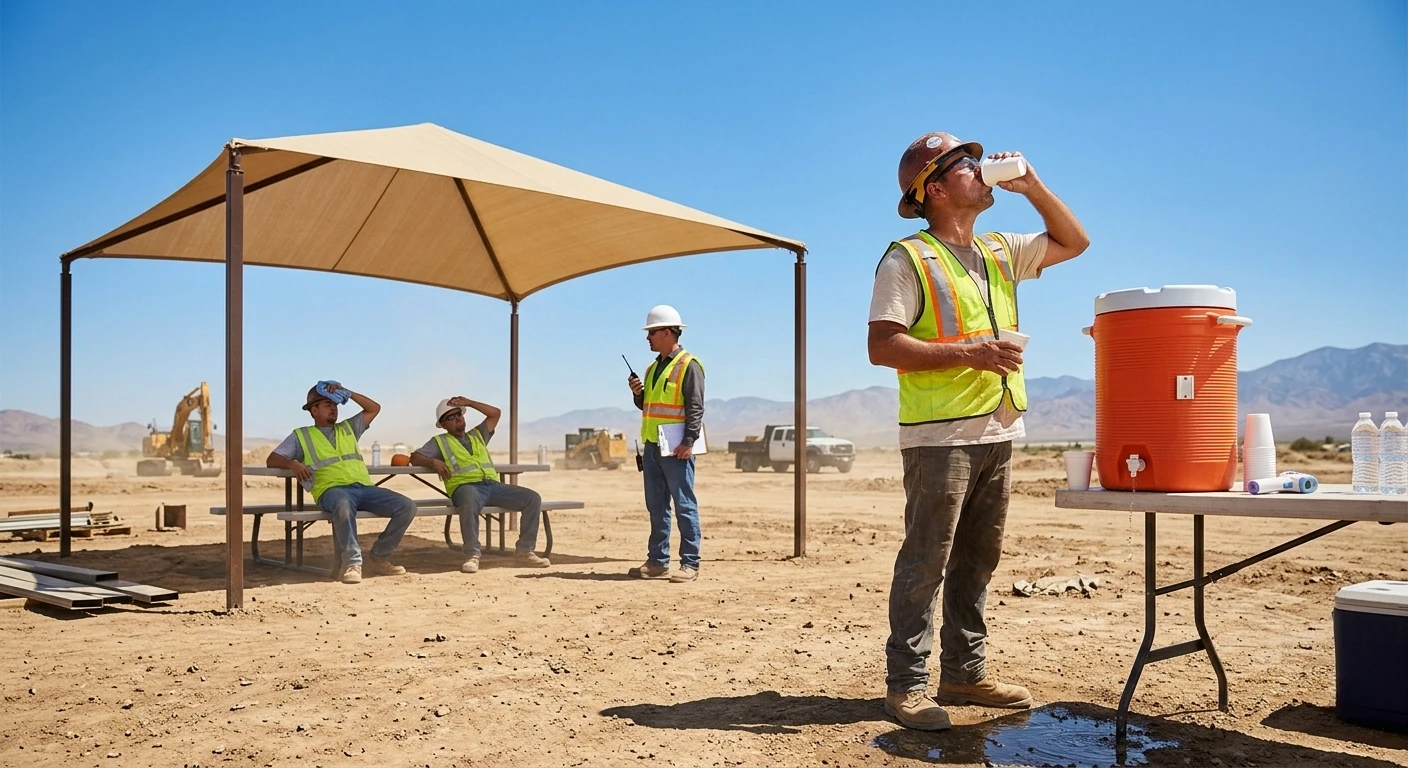
As summer temperatures increase across California, employers should revisit workplace heat safety procedures and ensure compliance with the state’s heat illness prevention requirements. California continues to maintain some of the nation’s most comprehensive workplace heat regulations covering both outdoor and indoor work environments.
California’s outdoor heat illness prevention standard technically applies to all outdoor workplaces at all times, but certain requirements are triggered at specific temperature thresholds. Key thresholds include:
80°F — Employers must have shade present and available when temperatures exceed 80°F. If temperatures are below 80°F, shade still must be available upon request.
95°F — Additional “high-heat” procedures apply in certain industries, including construction, agriculture, landscaping, oil and gas extraction, and certain transportation/delivery operations. These procedures may include closer employee observation, enhanced communication, and mandatory monitoring practices.
Employers must provide employees with access to fresh drinking water, shaded or cool-down recovery areas, emergency response procedures, and employee/supervisor training on recognizing heat illness symptoms.
Employers should also remember that California’s indoor heat illness prevention standard, which became effective in 2024, remains fully enforceable in 2026. The indoor standard generally applies when indoor temperatures reach 82°F and may require additional monitoring and control measures at higher temperature thresholds or in environments involving radiant heat or heat-retaining protective clothing. Compliance areas employers may want to review include:
Employee and supervisor heat illness training
Availability of drinking water and cool-down areas
Temperature monitoring practices
Emergency response procedures
Acclimatization procedures for new or returning employees
Additional Resources:
· California Division of Occupational Safety and Health (Cal/OSHA): https://www.dir.ca.gov/dosh/
· Cal/OSHA Heat Illness Prevention Resources: https://www.dir.ca.gov/dosh/heatillnessinfo.html


" height="23.912px" id="wp0kawXKP" width="24px"/><path d="M 10.074 11.225 L 10.747 7.558 L 6.827 7.558 L 6.827 6.261 C 6.827 4.323 7.587 3.578 9.555 3.578 C 10.166 3.578 10.658 3.593 10.942 3.622 L 10.942 0.298 C 10.405 0.149 9.093 0 8.332 0 C 4.322 0 2.474 1.893 2.474 5.978 L 2.474 7.558 L 0 7.558 L 0 11.225 L 2.474 11.225 L 2.474 19.205 C 3.897 19.558 5.372 19.648 6.827 19.47 L 6.827 11.225 L 10.073 11.225 Z" fill="rgb(255, 255, 255)" height="19.55876633959939px" id="rQE9cOqAi" transform="translate(6.625 4.442)" width="10.942px"/></g></svg>)
" width="22px"><path d="M 0 0 L 22 0 L 22 22 L 0 22 Z" fill="transparent" height="22px" id="g77oKxIqR" width="22px"/><path d="M 20.376 0 L 1.624 0 C 0.727 0 0 0.727 0 1.624 L 0 20.376 C 0 21.273 0.727 22 1.624 22 L 20.376 22 C 21.273 22 22 21.273 22 20.376 L 22 1.624 C 22 0.727 21.273 0 20.376 0 Z" fill="rgb(10, 102, 194)" height="22px" id="xNWzsGQxr" width="22px"/><path d="M 0.238 15.762 L 3.546 15.762 L 3.546 5.257 L 0.238 5.257 Z M 0.838 3.475 C 1.148 3.685 1.515 3.798 1.889 3.8 C 2.397 3.81 2.887 3.614 3.247 3.256 C 3.607 2.898 3.806 2.41 3.799 1.902 C 3.8 0.997 3.162 0.216 2.274 0.038 C 1.387 -0.141 0.496 0.332 0.147 1.167 C -0.202 2.003 0.087 2.968 0.838 3.475 Z M 12.431 15.772 L 15.738 15.772 L 15.738 9.272 C 15.738 6.064 13.745 4.969 11.899 4.969 C 10.193 4.969 9.074 6.073 8.755 6.72 L 8.712 6.72 L 8.712 5.264 L 5.531 5.264 L 5.531 15.772 L 8.84 15.772 L 8.84 10.075 C 8.84 8.557 9.802 7.817 10.783 7.817 C 11.712 7.817 12.431 8.339 12.431 10.032 Z" fill="rgb(255, 255, 255)" height="15.771623512903847px" id="cdNQ6QfFj" transform="translate(3.012 2.979)" width="15.738439668019623px"/></g></svg>)
" height="19.886px" id="aCmdPBwVg" transform="translate(1 2)" width="22px"/></svg>)