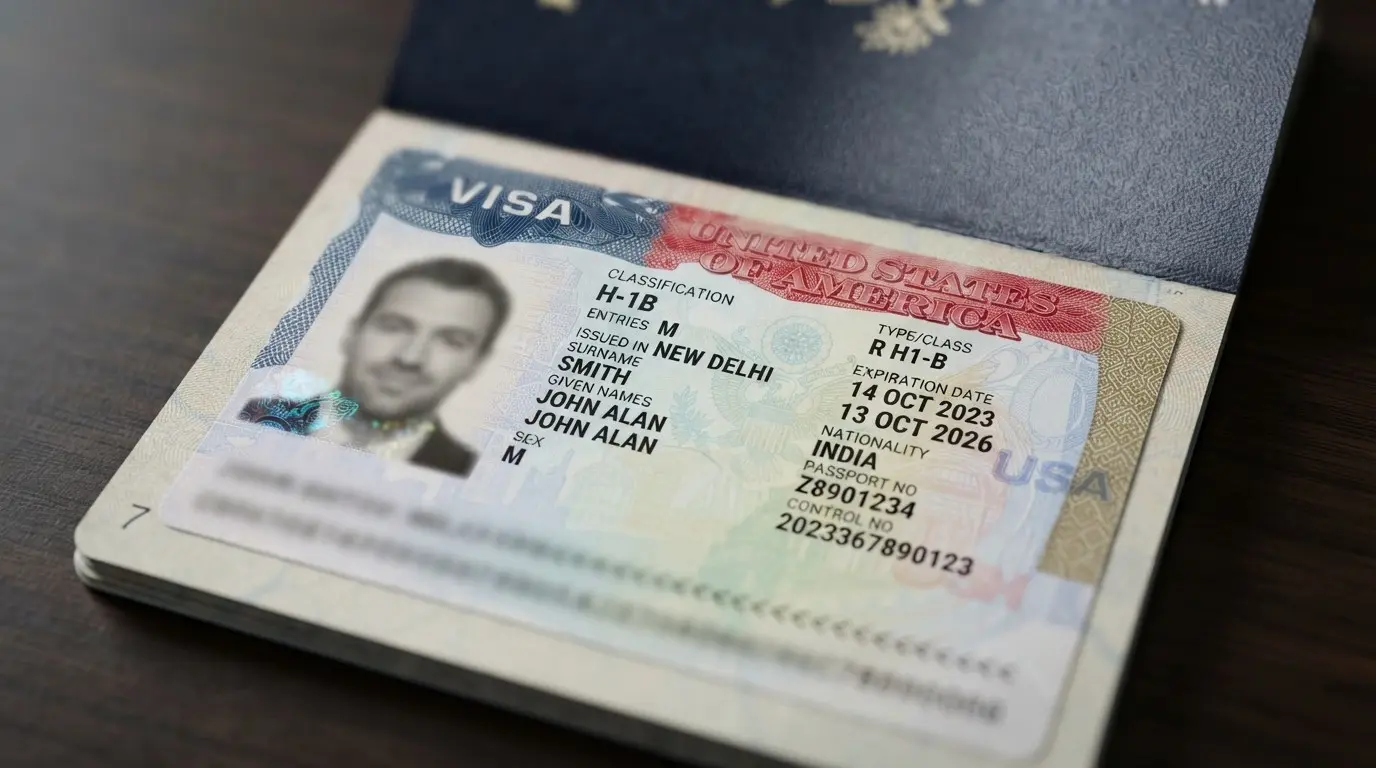
The U.S. Department of Homeland Security (DHS) is considering a regulatory change that could affect employers with H-1B employees. DHS has submitted a proposed rule that would eliminate the current up to 60-day grace period available to certain nonimmigrant workers after their employment ends.
The proposal has not yet been published in the Federal Register, and the current 60-day grace period remains in effect.
Under current rules, eligible H-1B workers may have up to 60 days—or until the end of their authorized stay, if earlier—to pursue another qualifying employment opportunity, change status, or make arrangements to leave the United States. See USCIS: Options for Nonimmigrant Workers Following Termination of Employment.
The H-1B program allows U.S. employers to temporarily employ foreign workers in “specialty occupations” that generally require specialized knowledge and at least a bachelor's degree or equivalent in a related field. Common H-1B occupations include IT, engineering, accounting, and other professional and technical roles.
The sponsoring employer generally must file a Labor Condition Application (LCA) with the U.S. Department of Labor and an H-1B petition with U.S. Citizenship and Immigration Services (USCIS), in addition to meeting applicable wage and other H-1B requirements. H-1B status is generally granted for an initial period of up to three years and can typically be extended for another three years.
Why It Matters to Employers
The current grace period gives an eligible H-1B employee time to find another employer willing to sponsor the employee and complete the required immigration process. The prospective employer generally must file a new H-1B petition and may incur government filing fees and legal costs as part of the process.
Without the grace period, an employee whose H-1B employment ends could have significantly less time to find another sponsoring employer and address their immigration status while remaining in the United States. Depending on the circumstances, the employee could have fewer options to transition to another employer without leaving the country.
This could be particularly significant for government contractors that employ H-1B professionals in specialized positions.
A tighter window to hire qualified H-1B talent — Contractors may have less time to identify and secure an H-1B candidate before the candidate's immigration status becomes an issue.
A smaller available talent pool — A qualified H-1B candidate who recently lost employment may have less flexibility to pursue a new position if the grace period is eliminated.
Greater risk to contract staffing requirements — Government contracts may require specific positions to be filled within defined timeframes. Losing a specialized employee or being unable to onboard a qualified replacement quickly could create operational challenges.
More pressure on recruiting and HR — Contractors may need to move quickly on qualified H-1B candidates while coordinating immigration filings, onboarding, and contract-specific requirements.
Additional costs and planning considerations — A new employer may incur immigration filing fees and legal expenses when sponsoring an H-1B worker.
For government contractors, the impact may be greater when positions are subject to U.S. citizenship, security-clearance, or other contract-specific eligibility requirements. An H-1B employee cannot move into a position that legitimately requires U.S. citizenship based solely on their H-1B work authorization. If the employee's current position ends, the pool of positions available to that employee may therefore be more limited.
Citizenship Requirements
Government contractors should not assume that all positions may be limited to U.S. citizens. A citizenship requirement must generally be supported by a specific law, regulation, executive order, or government contract requirement. For example, a federal contract may require certain positions to be filled by U.S. citizens, and certain security-clearance requirements may impose citizenship restrictions.
Employers should identify the specific legal or contractual basis for the requirement rather than assume that every position involving a security clearance is automatically limited to U.S. citizens. Where a position is legitimately restricted to U.S. citizens, an H-1B employee would not be eligible for that position based solely on their H-1B work authorization.
What Employers Should Do
No immediate action is required. Employers should continue following current H-1B requirements but may want to:
Identify H-1B employees in critical or difficult-to-fill positions.
Consider immigration implications when planning terminations or workforce reductions.
Consult immigration counsel before terminating an H-1B employee.
Monitor the proposed rule and any changes to the current grace-period requirements.
The 60-day grace period remains in effect today. However, employers that rely on H-1B talent should be aware of the proposed change and consider its potential impact on staffing and contract continuity.


" height="23.912px" id="wp0kawXKP" width="24px"/><path d="M 10.074 11.225 L 10.747 7.558 L 6.827 7.558 L 6.827 6.261 C 6.827 4.323 7.587 3.578 9.555 3.578 C 10.166 3.578 10.658 3.593 10.942 3.622 L 10.942 0.298 C 10.405 0.149 9.093 0 8.332 0 C 4.322 0 2.474 1.893 2.474 5.978 L 2.474 7.558 L 0 7.558 L 0 11.225 L 2.474 11.225 L 2.474 19.205 C 3.897 19.558 5.372 19.648 6.827 19.47 L 6.827 11.225 L 10.073 11.225 Z" fill="rgb(255, 255, 255)" height="19.55876633959939px" id="rQE9cOqAi" transform="translate(6.625 4.442)" width="10.942px"/></g></svg>)
" width="22px"><path d="M 0 0 L 22 0 L 22 22 L 0 22 Z" fill="transparent" height="22px" id="g77oKxIqR" width="22px"/><path d="M 20.376 0 L 1.624 0 C 0.727 0 0 0.727 0 1.624 L 0 20.376 C 0 21.273 0.727 22 1.624 22 L 20.376 22 C 21.273 22 22 21.273 22 20.376 L 22 1.624 C 22 0.727 21.273 0 20.376 0 Z" fill="rgb(10, 102, 194)" height="22px" id="xNWzsGQxr" width="22px"/><path d="M 0.238 15.762 L 3.546 15.762 L 3.546 5.257 L 0.238 5.257 Z M 0.838 3.475 C 1.148 3.685 1.515 3.798 1.889 3.8 C 2.397 3.81 2.887 3.614 3.247 3.256 C 3.607 2.898 3.806 2.41 3.799 1.902 C 3.8 0.997 3.162 0.216 2.274 0.038 C 1.387 -0.141 0.496 0.332 0.147 1.167 C -0.202 2.003 0.087 2.968 0.838 3.475 Z M 12.431 15.772 L 15.738 15.772 L 15.738 9.272 C 15.738 6.064 13.745 4.969 11.899 4.969 C 10.193 4.969 9.074 6.073 8.755 6.72 L 8.712 6.72 L 8.712 5.264 L 5.531 5.264 L 5.531 15.772 L 8.84 15.772 L 8.84 10.075 C 8.84 8.557 9.802 7.817 10.783 7.817 C 11.712 7.817 12.431 8.339 12.431 10.032 Z" fill="rgb(255, 255, 255)" height="15.771623512903847px" id="cdNQ6QfFj" transform="translate(3.012 2.979)" width="15.738439668019623px"/></g></svg>)
" height="19.886px" id="aCmdPBwVg" transform="translate(1 2)" width="22px"/></svg>)