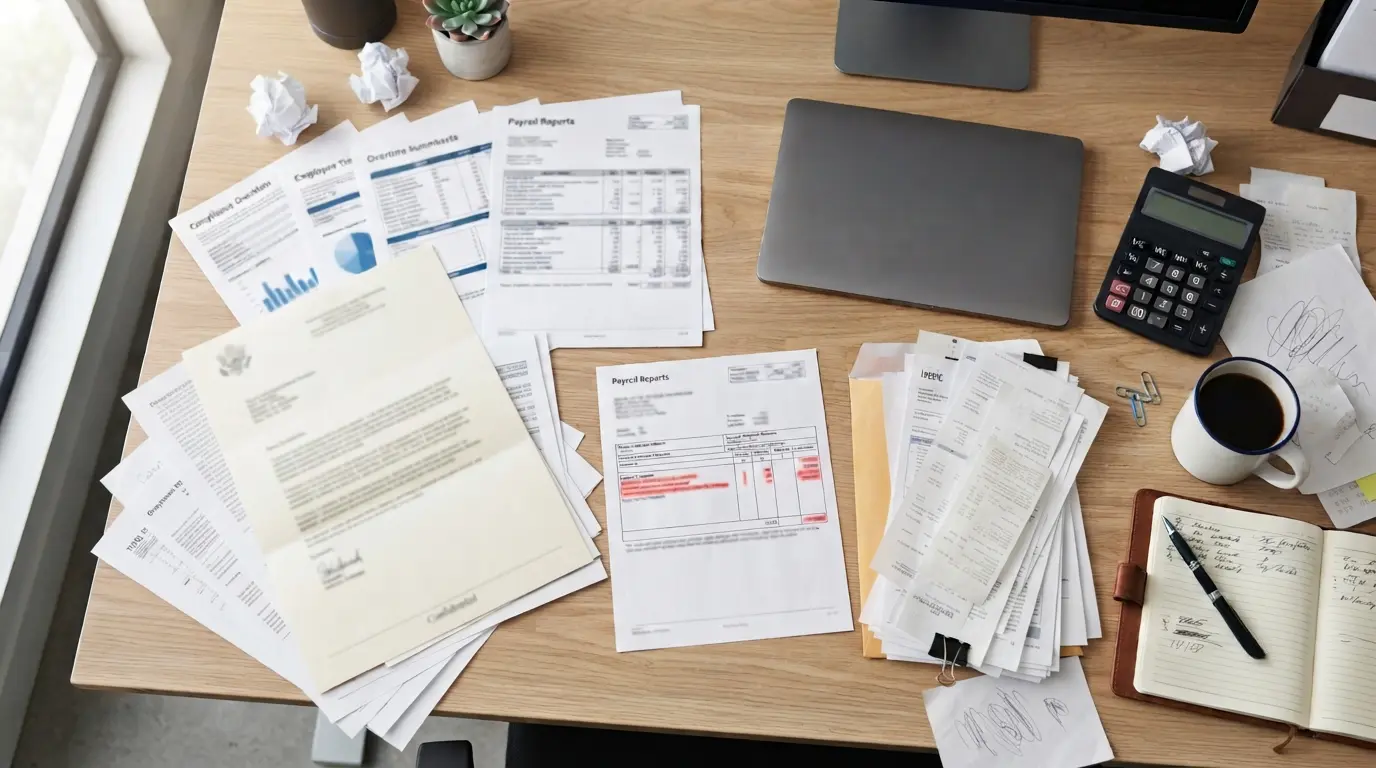
For many employers, wage and hour compliance seems straightforward—pay employees accurately and on time. However, the U.S. Department of Labor's (DOL) Wage and Hour Division routinely investigates employers for violations of the Fair Labor Standards Act (FLSA), and many findings result from common administrative mistakes rather than intentional misconduct.
Enforcement Spotlight
The U.S. Department of Labor continues to aggressively enforce the Fair Labor Standards Act. In Fiscal Year 2025 alone, the Wage and Hour Division recovered more than $259 million in back wages for nearly 177,000 employees nationwide—the highest annual recovery since 2019. Common violations included unpaid overtime, employee misclassification, and failure to compensate employees for all hours worked.
While many investigations involve large employers, small and mid-sized businesses are frequently investigated after an employee complaint. The DOL does not limit investigations to Fortune 500 companies—any employer covered by the Fair Labor Standards Act may be subject to an audit.
Government contractors may face additional wage compliance risks. In addition to the Fair Labor Standards Act, many federal contractors must comply with prevailing wage requirements under laws such as the Davis-Bacon Act or the McNamara-O'Hara Service Contract Act (SCLS). Timekeeping errors, employee misclassification, or improper overtime calculations can create contractual issues in addition to DOL wage and hour liability.
For government contractors, where contract compliance and accurate labor reporting are already under increased scrutiny, maintaining sound wage and hour practices is essential.
1. Misclassifying Employees as Exempt from Overtime
One of the most common compliance issues involves incorrectly classifying employees as exempt from overtime. Paying an employee a salary alone does not make them exempt from the FLSA's overtime requirements. Most exemptions require employees to satisfy both a salary basis test and a duties test. Positions that have evolved over time—or employees whose responsibilities have changed—should be reviewed periodically to ensure they continue to qualify for an exemption.
Tip: Conduct periodic exemption reviews, especially following promotions, reorganizations, or significant job duty changes.
2. Failing to Pay for All Hours Worked
The FLSA generally requires employers to pay nonexempt employees for all hours they are "suffered or permitted" to work. This may include work performed before or after scheduled shifts, responding to emails after hours, completing mandatory training, or performing work during meal periods. Remote and hybrid work environments have increased the likelihood of employees performing work outside their scheduled hours.
Tip: Establish clear policies for recording all hours worked and train supervisors not to allow off-the-clock work.
3. Incorrectly Calculating Overtime
Overtime calculations can become more complicated when employees receive nondiscretionary bonuses, shift differentials, commissions, or multiple hourly rates. These forms of compensation often must be included when determining an employee's regular rate of pay for overtime purposes. Errors frequently occur when payroll systems or manual calculations fail to account for these additional earnings.
Tip: Periodically review payroll calculations and ensure overtime is computed using the employee's correct regular rate of pay.
Get a second look at your wage and hour practices
Exempt classifications, overtime math, and timekeeping are where most DOL findings start. C2 Essentials reviews them with you, including prevailing wage rules on federal contracts.
✓ HR, payroll, and benefits built for government contractors
✓ Compliance support for federal contract and state employment requirements
✓ A dedicated HR team that knows how contractors work
4. Poor Timekeeping Practices
Accurate time records remain one of an employer's strongest defenses during a wage and hour investigation. Missing, incomplete, or altered time records can make it difficult to demonstrate compliance. Employers should ensure employees accurately record all hours worked and that supervisors understand they may not modify time records without a legitimate business reason and appropriate documentation.
Tip: Conduct periodic audits of timekeeping records and promptly investigate missing punches, recurring edits, or unusual patterns.
5. Assuming Federal Law Is the Only Requirement
Many states have wage and hour laws that provide greater protections than federal law. Depending on where employees work, employers may need to comply with state-specific requirements related to overtime, meal and rest breaks, final pay, minimum wage, or employee recordkeeping. For employers with remote employees or operations in multiple states, compliance should be evaluated under both federal and applicable state law.
Tip: Review wage and hour policies whenever expanding into a new state or hiring remote employees.
Helpful DOL Resources
The U.S. Department of Labor provides several excellent compliance resources for employers:
Fair Labor Standards Act (FLSA) Handy Reference Guide
Overtime Pay Requirements Fact Sheet #23
Wage and Hour Division Overtime Resources
How C2 Essentials Can Help
Maintaining wage and hour compliance requires more than accurate payroll processing. Proper employee classification, timekeeping practices, supervisor training, and periodic HR audits all play an important role in reducing compliance risk.
C2 Essentials works with employers to review exempt classifications, evaluate wage and hour practices, assist with policy development, and help clients navigate federal and state employment law requirements. If your organization has questions regarding overtime eligibility, employee classification, or wage and hour compliance, contact your HR Team before a small issue becomes a costly investigation.


" height="23.912px" id="wp0kawXKP" width="24px"/><path d="M 10.074 11.225 L 10.747 7.558 L 6.827 7.558 L 6.827 6.261 C 6.827 4.323 7.587 3.578 9.555 3.578 C 10.166 3.578 10.658 3.593 10.942 3.622 L 10.942 0.298 C 10.405 0.149 9.093 0 8.332 0 C 4.322 0 2.474 1.893 2.474 5.978 L 2.474 7.558 L 0 7.558 L 0 11.225 L 2.474 11.225 L 2.474 19.205 C 3.897 19.558 5.372 19.648 6.827 19.47 L 6.827 11.225 L 10.073 11.225 Z" fill="rgb(255, 255, 255)" height="19.55876633959939px" id="rQE9cOqAi" transform="translate(6.625 4.442)" width="10.942px"/></g></svg>)
" width="22px"><path d="M 0 0 L 22 0 L 22 22 L 0 22 Z" fill="transparent" height="22px" id="g77oKxIqR" width="22px"/><path d="M 20.376 0 L 1.624 0 C 0.727 0 0 0.727 0 1.624 L 0 20.376 C 0 21.273 0.727 22 1.624 22 L 20.376 22 C 21.273 22 22 21.273 22 20.376 L 22 1.624 C 22 0.727 21.273 0 20.376 0 Z" fill="rgb(10, 102, 194)" height="22px" id="xNWzsGQxr" width="22px"/><path d="M 0.238 15.762 L 3.546 15.762 L 3.546 5.257 L 0.238 5.257 Z M 0.838 3.475 C 1.148 3.685 1.515 3.798 1.889 3.8 C 2.397 3.81 2.887 3.614 3.247 3.256 C 3.607 2.898 3.806 2.41 3.799 1.902 C 3.8 0.997 3.162 0.216 2.274 0.038 C 1.387 -0.141 0.496 0.332 0.147 1.167 C -0.202 2.003 0.087 2.968 0.838 3.475 Z M 12.431 15.772 L 15.738 15.772 L 15.738 9.272 C 15.738 6.064 13.745 4.969 11.899 4.969 C 10.193 4.969 9.074 6.073 8.755 6.72 L 8.712 6.72 L 8.712 5.264 L 5.531 5.264 L 5.531 15.772 L 8.84 15.772 L 8.84 10.075 C 8.84 8.557 9.802 7.817 10.783 7.817 C 11.712 7.817 12.431 8.339 12.431 10.032 Z" fill="rgb(255, 255, 255)" height="15.771623512903847px" id="cdNQ6QfFj" transform="translate(3.012 2.979)" width="15.738439668019623px"/></g></svg>)
" height="19.886px" id="aCmdPBwVg" transform="translate(1 2)" width="22px"/></svg>)